portable hard drive vs desktop image

poolhallju
The main things I will be doing are:
homework on Microsoft Office programs,
using the internet to download music from iTunes and burning to disc,
and uploading pictures from my camera for temporary storage on the desktop.
I don't really understand the difference between the types of memories and the capabilities they provide. Different processors? CD R and DVD R vs. CD RW and DVD RW--what is this?? If you have a suggestion on what computer to consider, please include that in your answer. **I will not be considering Apple because of my previous experience with the brand.
Thank you, yahoo-ers!
Answer
*smiles at Apple reference*
when I was looking around before buying this laptop, i did wander into an apple store out of curiosity
walked out again about five minutes later and didn't seriously consider an ibook in any of my further reckoning :-)
For the uses you've specified, you'd be as well to buy second hand if money is an issue - anything you can get these days --- for all of Intel's hard sell TV adverts --- is about 3 or 4 times more powerful than you really need for any of that. But, if you can afford it, you may as well get a nicely specified machine; unlike getting a 4x more powerful car, you won't be spending a fortune on fuel or insurance, or suffering from cripplingly heavy handling or go deaf. A well made modern machine will burn up no more, or possibly less power than a much, much slower one from a few years ago, and weigh less / be quieter too.
First question - what are your priorities re: portability vs capability? Will you be carrying it around a lot all day, doing a lot of work off the battery and mainly with lightweight files kept on the hard disc, or will it be mostly sat at home on a desk, plugged in, doing a fair bit of media work, playing DVDs etc? That's the main tradeoff these days, as there's an awful lot of choice in terms of form-factor. Used to be that a laptop was a known quantity in terms of size - like two letter writing pads stacked on each other. Not any more.
Personally I went for the lightweight portable route, as I needed to do a fair bit of wordprocessing and other office stuff on the road (well, the train, and around all manner of random places) and needed something a bit thinner, but no more spread out than that old 2-pad electronic jalopy (£40, used, with a good battery - bargain!) I'd been using before, as my arms were tired but the available work spaces were tight as rubber gloves on wet hands. A modern thin-bordered 12" screen offers a lot more working area (almost to the level of a once-common 14" tube monitor) than an older laptop, in the same size case - it's easily enough for me, and has the same resolution (same conceptual desktop space for windows etc) as my mother's heavier 14". Besides, if you're typing, you're only looking at a tiny, tiny part of it at a time; the old one had about half the pixel resolution of this and was still OK for writing lengthy reports!
I've sacrificed a bit of potential screen area, a bit of hard drive space and CPU speed, one speaker (internal mono's not an issue if you rarely use it without (stereo) headphones) and an internal DVD drive in order to get something sleek and lightweight with a phenomenal battery runtime without paying over the odds; but with a little research and in-store testing, made sure the actual performance wasn't suffering much (quick HD even if "small", large and fast memory, current-generation albeit lower speed CPU, good graphics chip, good solid typist's keyboard, standard width screen to maximise the "useful" WP space). Plus it's a tablet PC... I can sign my name in documents, or flip it over and hold it like an actual paper pad and use the pen as a mouse... and as I waited for the easter sales, I got a cracking bundle deal with an (nice, but very bulky and therefore stay-at-home) external dual layer DVD writer, TV tuner card, etc.
Alternatively, you may want to watch DVDs or not have brilliant sight, and particularly burn a lot of discs... an internal drive and a large screen will be particular boons here, and you'll likely get an even better keyboard into the bargain, with massive battery life or pen functions being minor concerns. They can go all the way up to 17" widescreen, with high quality integrated speakers etc, and what is more or less a full sized desktop keyboard attached --- becoming basically portable desktop PCs, in the same way that a 14" TV with a pop-out handle at the top is "portable"... when you fold it up, you're still carrying a 17" screen, speakers, and large keyboard with a high performance computer cleverly tucked away inside them.
So my personal reccos on hardware - there's some common and some different elements "depending":
Small and light:
* No, or basic & very thin integrated optical drive (a lot of it's tasks can be taken over by thumbdrives, mp3 players and wireless networking these days). However, you'll want to get an external drive as well to replace it - theyre still too useful to abandon. Almost anything will do, so long as its DVD Dual Layer.
* Current or immediately previous generation CPU and power-saving mobile chipset. I'd avoid AMD for now, as they're uncharacteristically lagging Intel, particularly in the mobile stakes. Go for a Core (probably solo, but try a duo if the stated battery life is good - it could potentially *extend* it for media apps) or Pentium-M processor with Speedstep (automatically adjusts chip speed vs power drain according to demand / battery), around 1.5 to 2.0ghz. Pentium-M with speeds that are multiples of 200mhz are older generation; those with multiples of 266 are nearly current and a better bet, providing good performance with frankly astounding efficiency. Make sure its based on the well-established Centrino power saving main chipset.
* 12" screen or thereabouts. You can get away with 11 or 13" (mainly Sonys), or even 14" with a clever manufacturer - there are even some 14" tablets, which implies they must be light enough to comfortably hold up in one hand! For the larger sizes, widescreen is a good idea - you dont get a great improvement in word processor or internet work space, but the machine will be a more easily handled shape (side to side room is far less often an issue than front-to-back), and you can tile windows to the left and right to view two slightly narrow ones at once. If you go down this route, try for 1280x800 resolution - it gives the best vertical breathing room, and is just dandy for both the screen size, and for viewing videos (including full screen high definition - 720p with just the very slightest letterboxing, as will be evident on a LOT of larger screens used for it)
* Memory is your friend, as it prevents slow, power draining disc accessing. 512mb as a minimum; anything less under XP can cause noticable, frustrating slowdown. 768mb or 1Gb is pretty good. It will almost certainly be DDR (double data rate), with the actual speed rating - i've found to my surprise when upgrade hunting recently - not seeming to currently make a great impact on performance, at least within the ultraportable laptop speed ranges. It should be matched to the motherboard/CPU speed by the manufacturer anyhow.
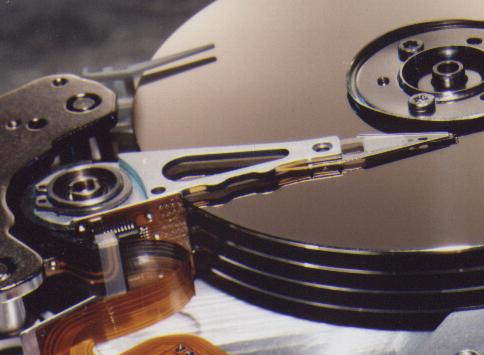
* A moderately sized hard disc should allow you to store a fair few mp3s and pics/vids... i'd say 40gb as a minimum, 60 or 80 is better. At least 5400rpm if at all possible; ditto Serial-ATA connection and a large disc cache (8mb) as these will help accelerate performance noticably. If its a small one you may want to be ruthless tracking down all of XP's bloat before you start saving a lot of media files - I cut the best part of TEN gigabytes off the disc by hunting & zapping all the piles of default-install multilanguage files (mainly tutorials that no one will ever watch)...
* Half decent graphics chip. You can't expect miracles at this end of the range, but something like an Intel 91x series (Im not an intel schill, honest) will give excellent 2D / video performance and acceptable 3D for non demanding tasks or games.
* Video out on the main machine (not via a Docking Station add-on) is a definite winner, as it lets you use bigger monitors or projectors where available, bypassing (or adding to) the small internal screen. TV out also a plus.
* Expansion card slot. Must have. Crippled without it, even given how many things use USB these days. Don't settle for slow USB or wireless network either - the high speed versions are cheap, single chip designs, and can easily fit in hand-held devices. A memory card reader is also handy, if you lose your camera cable (or it dies altogether) and its of a compatible type.
* Good mouse options - many have touchpad AND stick these days. If it's one or the other - TAKE THE PAD! Also see if you can get a wheel-type device integrated in the mouse buttons - i'm sorely missing that capability.
* Test the keyboard if at all possible... unlike a desktop, you likely cant change a nasty one. You don't want finger ache from a sloppy one, or confusion over exactly where otherwise normal keys (backslash, reverse quote, hash, enter, backspace...) are located.
* GOOD BATTERY LIFE. Tell anything offering less than 4 hours in battery-saver mode where to stick it. Fast charging is also nice... e.g. under two hours 0 to 100% when off / in saver mode.
* Light weight. We're talking 2.5lbs / 1.25kg or less here. That's considerably heavier than you think, when you have to carry it and hold it up.
* And if you can ... why not get a tablet PC? Just for bragging rights if nothing else. It may unleash a creative spark in you, even more so than a regular graphics tablet... Remember they have handwriting (unnervingly accurate) and speech recognition (of a sort) thrown in, if you can't hack using an onscreen keyboard.
Price: £800, special bundle offer (+ more for office, cd burner software)
Quasi desktop:
* You gotta take the core duo, somewhere around 2 - 2.5ghz. This thing will toast along but wont break the bank electricity wise (or chuck out a lot of heat and need overly noisy air cooling). Again try for intel, centrino, speedstep etc. In a few months you may want to reconsider AMD as theyre at least regaining ground in the high performance market.
* Oddly you can more get away with 512mb here as the cpu and HD will be quicker, and power isnt AS much of an issue. Still, 1Gb is better. DONT SETTLE FOR LESS THAN 512.
* Bigger hard disc is the order of the day. At least 80gb - that'll see you right for music and photographs for a good long time.
* Internal DVD writer. Dual layer if at all possible. Other than this distinction they're all much of a muchness. I don't know if there's an e.g. HD-DVD or BluRay drive that also offers writing capability right now...
* Larger screen! Almost certainly widescreen, and a minimum of 14". The maximum is up to you, as in how much you'll want to cart it about. 15" is a good compromise. Look for a good, high resolution, so that things don't look blocky and indistinct despite the large screen. 1024x768 at these sizes is sign of a manufacturer offloading out-of-date parts, as only sub-12" screens go lower than this anymore. 1280x800 widescreen is a minimum. 1280x960 / 1024 or 1400x1050 standard shape and 1440x900 widescreen are good starting points.
* Very good video "card" chipset - nVidia GeForce Mobile and the like. Not sure on the exact names :-) but slightly stripped-down versions of their desktop cards. Be careful of them robbing their working memory (sometimes excessive amounts of) directly from main RAM though; particularly if you're marginal for spare memory, this can push things over the edge into a hard disk-thrashing nightmare.
* Decent integrated soundsystem. Doesn't have to be booming, but at least stereo speakers that make a good attempt at delivering a little power across most of the audible frequency range.
* Decent set of integrated ports. As well as video and TV out, you may see a parallel (old printer) socket, alongside network, modem, several USB, maybe a firewire, possibly a multi-card reader and video INput, plus headphone/external speaker, microphone and line-input audio - which might be re-purposable into 6-way surround sound outputs. A nice bonus would be a PS2 external keyboard/mouse socket, as running these through USB can leave something to be desired in terms of immediacy and accuracy.
* Again, good mouse options... and a good keyboard. Being large is all well and good, but it pays to be clever as well. Some 14 and 15" laptop manufacturers seem content to stuff in the cheapest one-size-fits-all (i.e. it's only as wide as a 12" one) keyboard and be done with it. Not good enough.
* Battery life is a bit of a moot point on these. A lot of them can't get more than 2 hours even with all the power saving features turned on, which is just about enough to boot up, watch a standard length DVD, and safely shut down just as the warning light starts to flash. Again, get what you can (every little helps, particularly if you're trying to finish re-editing the last paragraph of an important essay and then dump it onto your pendrive with only 5% juice remaining), but don't expect greatness.
---- for all this, you'll probably pay 3/4 the price of the ultraportable one..!
General stuff:
* Memory. Can't stress it enough. 512 of DDR main RAM is your minimum. More if you can at all afford it. The same rule holds true here as for about the last fifteen years of home computing: if you don't put enough memory in your computer, you may as well fetch the rest of the parts from landfill, as they won't make a blind bit of difference to the performance. It's a major bottleneck, and just gets worse as both operating systems and programs suffer that odd disease known as Creeping Featuritis.. and as they offer more "shiny things" and labour saving items, so their memory load increases :-)
* CPU speed isn't so important any more -- most days i find the machine trotting along happily at it's speedstep minimum of 800mhz no matter what i'm doing -- but a decent chip design IS, as it affects more ephemeral and rarely advertised, but actually quite important things like memory access speed, amount of max-speed "cache" memory, power consumption, available multimedia instruction sets and the like. Do not accept a Celeron (cut down pentium), or some rubbish (currently!) AMD shoe-in. Right now the only game in town worth playing is late-model Pentium-M (budget) or Core Solo/Duo (more expensive).
* DO NOT ACCEPT ANYTHING WITHOUT USB 2.0 PORTS OR WIRELESS INTERNET ... and really, don't accept anything with Wireless "b" type (11 megabit/sec). It'll work fine for internet, but a decent "g" or even "n" type is a lot better and more future proof (54mb/s and higher). If at all possible, make sure it has infra-red and/or bluetooth built in also. These are very handy for e.g. communicating with mobile phones to extract their tasty phone-cam juices and backup their addressbooks.
* Again, mouse replacements. USB mice are pretty awful things if you get them in the wrong socket (and with some chipsets, ALL of them are the wrong one), jumping about etc, and often now the old mainstay PS2 socket is rarely seen - so it's good to have a usable internal one. Hence looking for something with a stick and a pad... generally a pad is more intuitive and dependable, but some swear by the stick, and it can be quicker for some things... it's nice to have the choice. And a scroll wheel/button... :-) ((of course, a pen tablet screen is a third and interesting choice!))
* Really, check the keyboard. Some of them can be really spongy and horrid, or clacky, or far too thin for touch typing comfort (*shoots a poison glance at Sony Vaio*). There needs to be some travel and tactile feedback, and a good solid backboard, but not necessarily as much as as a standard desktop model (particularly travel-wise - a laptop keyboard may be less than 2mm, compared to about 5 for a desktop, saving three precious mm off the unit height with the lid down). Of course, this is not possible if you're ordering online, but I have my reservations with doing that for something like a laptop anyway.
* DVD drives... just like it got with CD writers, it's hard to pick a bad one. Just look for something which offers dual layer writing, and as many of it's functions supporting both "plus" and "minus" type DVDRs, and you'll be fine almost no matter what DVD or CD you put in.
* I'd get a memory stick / thumb drive / USB disc / whatever you want to call it at the same time, if you haven't got one. They're invaluable and really reduce your dependence on CDRs (or even floppies). Somewhere around 512 to 2gb is the sweet spot price wise right now, and 128 / 256mb ones are dirt cheap. McDonalds will probably be giving them away in happy meals next week.
* Thinking of brands for a moment... don't get too attached to any one or be affected by advertising. Apple may make a resurgence. Someone may start up out of nowhere and shock the market. Nothing's certain. Still, there's a few brands who are normally reputable (often a matter of opinion, though!)........... e.g. HP-Compaq (can't complain about the one i'm using now!), Toshiba (not high performance or classy, but solid), Acer (reliable budget models), IBM-Lenovo (traditionally the gold standard, with good reason), and recently Fujitsu and Samsung. I personally wouldn't want to use a Dell if i even got it for free, particularly after the exploding battery fiasco. Sony... there's too much of their business tied up in image these days, and taking stuff to unfeasible extremes, and the products suffer for it. A no-name brand will often be cheaper, and seem to offer a better spec, but be careful to scrutinise the hardware list against the bigger players, and see if they're cutting important corners anywhere then covering it up, e.g. a rubbish years-old video subsystem that will slow everything down whilst chowing lots of memory as it has none of it's own (remember: higher resolution = more memory needed.. typically these days horizontal x vertical pixels x 4 = minimum bytes required).
* LOOK FOR A DEAL!!!! If at all possible wait for the sales after christmas, unless it's a present for someone. DONT rush out and buy one on my or anyones reccomendations. Have a good look around, shop around online, find somewhere like PC World that looks like your typical messy, expensive retailer that in reality occasionally throws up a gem. Go online and use the points covered here as jump-offs to research stuff around the topic e.g. on google. It may take you a month in your spare time to come to a decision, it'll be a month well spent, not least because with every week your money can get you a slightly better computer without even needing to accrue interest.
* See what software you can get included! It's always a good thing to try for. My own deal was more hardware than software based, but getting office and something else thrown in would have actually been better as it's worth more than a DVD drive...
So to quickly run through the other more pointed... er, points...
* Microsoft office. You mentioned the crucial "homework" word. I don't know if this applies where you are, but in the UK they offer the Student and Teacher package ... you get Word, Excel, Powerpoint and Outlook 2003 editions, fully functional, for a knock down price (similar to or even slightly less than full-price Word sold seperately). Absolute bargain and very useful.
* Using internet for iTunes etc. Particularly as you're going to be tying money up in your downloading - and/or the temptation is there to go to less reputable sites and try your hand at getting it for fee - you'll want decent virus protection. DONT take the offer of getting Norton for a year cheap with the computer; better, kinder alternatives are available free online for home users... AVG and Avast! to name just two in the "A" section. Get an antivirus like these, get a software firewall, if you're using a wireless router to connect to the internet make sure it's hardware one is on. Gather a few anti-malware programs like Ad-Aware and Spybot Search and Destroy and make sure you also avail of their preventative options not just the after-the-fact ones. Literally, it's hard to be too careful. Also be sure to update windows regularly. I prefer to leave it set to "download automatically but update manually" - that way you can exercise a little more control over what's going on, refuse any updates that look suspicious, and not be ambushed by it trying to force an update at a clearly silly time, like when you're trying to shut down urgently.
This is also where the wireless internet, DVD burner and battery life bob up again - both very useful things. How about burning your own video, after downloading the backing track lounging on the couch and walking about the house?
* Camera pictures transfer - this is where an integrated card reader or USB 2.0 socket come into their own. Original digital cameras used a treacle slow serial link, which was never any good. USB 1.1 was a vast improvement, but still a bit sluggish for multi-megapixel cameras. USB2 rips along at an alarming pace, and transfer from a card reader is typically even faster, unless it's attached itself by usb... Also it's where your hard disc space comes in. Depending on your megapixels, memory card size, whether you take videos as well, and if you just take a few critical snapshots or are a complete shutterbug, your storage needs may vary. But it's always best to err on the side of BIGGER!
* By "types of memories" I will assume you mean between RAM and Hard Drive? Quick analogy session: If the computer is your office, RAM is your working area which has to be cleared off at the end of a day, and the Hard Disc is a big filing cabinet. You take stuff out of the cabinet, work on it, and put it away when you're done. Depending on the sizes of each, you (the computer) can store more or less, and work on more or less things simultaneously without needing to resort to stacking them up on the floor (using a coned-off part of the hard disc as "virtual memory" to expand working room at the expense of a lot of speed) and moving them on/off the desk as required. They're all much the same, differing only in size and speed, and not coming in a great deal of variety. The idea is basically to get as much and as high a speed as you can afford, concentrating on: memory size, disc speed, disc size, memory speed, in about that order. Though there's little to choose from speedwise - memory is all "double speed" (DDR) and runs at a few rather similar rates, discs are 4200, 5400 or 7200rpm for laptops, with a choice of quick ATA or super quick Serial ATA connection - so often size is the decider. 512mb is a huge amount of memory, at least by yesteryear standards (my first PC used a THOUSAND times less), but is sadly necessary for the massively capable, media-rich programs we now use. Disc storage can be thought of in terms of CDs (2/3rd gigabyte) or DVDs (4.3 / 7.9Gb) and is hard to express in metaphorical terms. 1gb will get you about 15 hours of music or an hour or two of video at current standards, if that makes it any easier - or a couple thousand fairly porky Word documents. Just aim for 40gb as a practical minimum for comfortable working (i.e. leaving no less than 10% free space).
* Different processors... think I already said enough here :-) The AMD and older / cheaper Intel chips are competent enough, and you probably wouldn't notice much difference for a couple years except for battery life and heat, but there's a price vs capability and efficiency tradeoff that's just not worth it right now. There's something of a shift going on from ever reaching for "faster" (higher mhz / ghz clock speed) and more power-hungry chips, to "massively parallel" (multiple cores - "virtual" chips in one package - at similar or lower speed) setups with impeccable green credentials... working smarter, not harder. Why stick in the mud?
* Optical drive types... OK....
CD - you know CD. It plays music up to 80 minutes. Holds data up to 700mb. Pre-written. Can be read at single speed, or all the way up to about 60x normal speed in the right drive (where centrifugal and vibrational effects start to get silly - as it's a fairly weak, flexible item spinning at about 15000rpm).
DVD - ditto. Data upto 4.3 or 7.9Gb depending on one/two layers. One to four hours playing time. Readable up to about 16x, as a regular DVD spins several times quicker than a CD.
CD-R ... a CD that can be written to "once"... you can write in steps, if you like, but nothing written can be altered, once it's there, it's fixed. Can be written at pretty high speeds, upto 48x normal audio playing speed under the right conditions (16 or 24x is more realistic - this is relative to 150kb/sec data, or real time playback speed).
CD-RW... a CD that can be written to multiple times, and optionally erased in-between. Particularly useful when "packet formatted" that allows you to use it like a 600mb-ish floppy disc (some space lost to the formatting). Usually not writeable as quick - 16x is the limit, 10x more realistic.
DVD-R... as before, a DVD that can be written to once. But there's added complication in the form of DVD+R... both are standards for writable discs put forward by rival companies that differ in some minute technical regard. It doesn't matter anyway, as most drives can read both (some, e.g. set-top players, prefer one or the other, and you normally only find this out by experimenting), and most modern writers can WRITE both, too. Write speeds can be all the way up to 16x (more reliably 6 or 8x), single layer only.
DVD-R DL ... (again, also in +R form) It took a crazy amount of time coming, but now dual-layer discs are writable as well. Speeds go up to 8x, but more often 4 or even just 2.4x, needing 40 minutes to fill one (5 minutes per Gb, slower than many CD writers), meaning you have to balance the need to get everything on one disc vs the time needed to do it. That and the reduced read-reliability of the discs - they're still a bit prototype, haven't really made it into home DVD recorders, and may be totally eclipsed by blu-ray writers.
DVD-RW ... Re-writable versions of the plus and minus discs exist too. I haven't ever used them myself.. there seems little call to, unless you're testing out e.g. a DVD menu system and dont want to waste loads of discs. Write speeds up to 8x if memory serves me correctly, and they were actually the FIRST writable DVD format - non-erasable ones came SECOND! Suffer similar but not as bad reduced reliability as dual layer, and are the main media for home DVD recorder devices. There is a variant called DVD-VR specifically for home recorders, which allows easier editing and time slipping or somesuch.
Any modern drive worth it's salt should support ALL of these, and at good speeds. Additionally it may support DVD-RAM, which is a lower capacity, lower speed but highly robust professional / mastering type rewritable format. e.g. my "free" bundle drive looks like it would be more at home shoring up a building, but supports 8x DVD+-R/RW writing, 4x +-DL writing, 3x RAM write, 48x CDR and 16x CDRW, plus 48x/16x read speeds. Just make sure they're all there, and you have nothing to worry about. It's good if a decent program such as Nero 7 is included for mastering and burning your discs; if not, it's definitely worth paying for, as it's good software, and effectively gets cheaper per disc each time you use make another project.
Final thought:
I can't reccomend any particular one to go for, you know your circumstances far better. If you can digest the litany above, go off for a virtual stroll around manufacturers websites and see what matches your criteria... new models come out all the time, and older ones (that were the new ones 3 - 6 months ago... your needs DONT typically change as fast as that unless you start a new job!) get steadily more affordable and accrue clearance deals to entice you to take them off the sellers hands at a near-loss.
AND ALWAYS CHECK THE FINE PRINT! :-)
What are the pros and cons between getting a laptop vs. a desktop?

! L O
If I have a budget of $1500 (u.s. dollars) would it be better if I get a laptop or a desktop
Answer
Because laptops nowdays contain the same stuff as desktops, n=buy yourself the best laptop you can. here are some pros and cons though.
Laptops
Pros:
Portability
Built in webcams (If you order them)
Wifi
umm...like I said, not to many differences except for these.
Cons:
smaller space to work in if you like to open you computer to mod it.
cannot be given quite as many extras as a desktop.(Lights, extra hard drives, ect.)
Destops
Pros:
Can hold more raw power if you actually need it.(You only need this kind of power if you are an EXTREME gamer and even many laptops are good for this. Check out alienware.)
Cons:
Not portable
drop it and it will habe a greater chance of being fatally broken.
Not as "cool"
So being as portability is the only real factors here- go with the laptop. I suggest a Macbook.( www.apple.com ) These don't crash, they are virus resistant, come with lots of extra good software for photos, movies, word processing, ect., and they are made VERY well.
Hope this helped! :-)
Powered by Yahoo! Answers